
Here is a comprehensive news report on the latest military and political developments.
Republic BD News
First With The Truth
“No Brakes”: US and Israel Vow More Intense Air Assaults on Iran; Internal US Dissent Erupts as Official Resigns
Senior International Correspondent
Published: March 20, 2026, 8:00 PM | Updated: 10:30 PM
Tehran/Washington – The Middle East is bracing for its darkest hour yet as the United States and Israel have jointly pledged a second, even more devastating wave of airstrikes on Iran, explicitly ruling out any diplomatic off-ramp. As bombs continue to rain down on Tehran and other major cities, the conflict has drawn sharp international condemnation and, for the first time, a major internal rupture within the US administration.
With no signs of de-escalation, the military industrial machines of both nations are grinding toward what officials describe as a campaign to “decapitate and degrade” the Iranian regime’s military capabilities permanently.
“The Second Wave”: Nuclear Sites in the Crosshairs?
Pentagon and Israeli defense officials confirmed tonight that “Phase Two” of the aerial campaign is underway. This wave is described as “harsher” and more widespread than the initial strikes that targeted energy infrastructure and leadership figures.
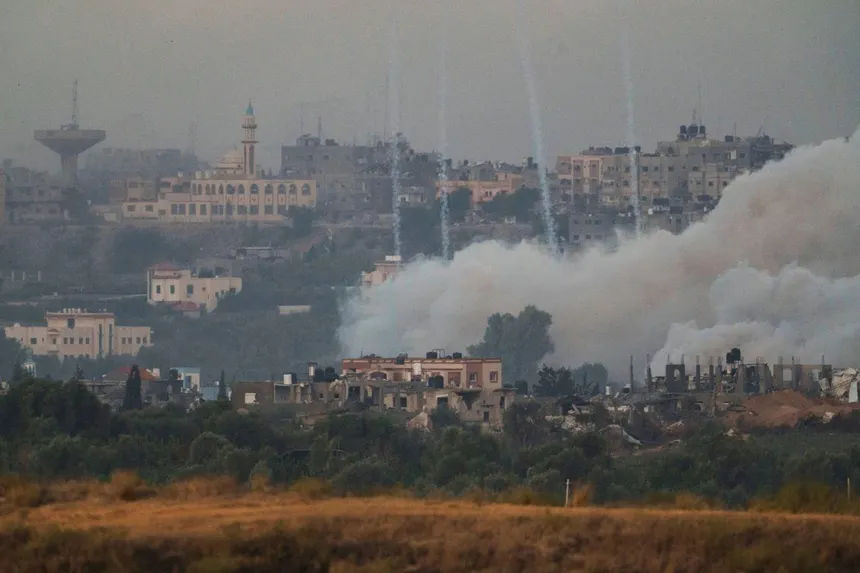
- Targets Expanded: Reports from the ground indicate that strikes have intensified around Tehran, with plumes of smoke rising over the capital. Crucially, explosions have been reported in the vicinity of the Bushehr Nuclear Power Plant.
- Russia’s Warning: The strike near Bushehr, a facility built and serviced by Russia, drew an immediate and sharp response from Moscow. The Russian Foreign Ministry condemned the action as “playing with fire,” warning that targeting nuclear installations could trigger a radiological catastrophe that would engulf the entire Gulf region.
- Cluster Munitions: Unconfirmed reports from human rights monitors on the ground suggest the use of cluster munitions in populated areas outside Tehran, which would likely constitute a violation of international humanitarian law if confirmed.
Iran has continued its retaliatory barrages, launching waves of missiles at Israeli cities. While the majority have been intercepted by Israeli and allied air defenses, officials in Tel Aviv confirmed that several civilians have been injured by falling shrapnel, though no fatalities have been reported in the latest salvo.
Internal US Dissent: Top Counterterrorism Official Quits
As the bombs fall, the first major crack has appeared within the Trump administration. The White House confirmed the resignation of the nation’s top counterterrorism official, whose office has been vocal in opposing the widening conflict.
According to senior administration officials who spoke on condition of anonymity, the official submitted a blistering resignation letter, calling the war “unnecessary, strategically unsound, and extraordinarily risky” for American national security.
The official, whose name is being withheld pending a public statement, reportedly argued that the campaign has diverted critical resources away from genuine terrorist threats (such as ISIS and Al-Qaeda) and has needlessly united America’s adversaries.
This resignation highlights a growing unease within the US national security apparatus, even as President Trump and Prime Minister Netanyahu double down on their military posture.
No Diplomacy in Sight
Efforts by UN Secretary-General António Guterres to mediate a ceasefire have been flatly rejected by Washington and Tel Aviv. A White House spokesperson stated, “There will be no talks while our citizens and allies are under threat. The time for diplomacy is over.”
Meanwhile, the human toll continues to mount. Independent estimates now place the number of casualties in Iran in the thousands, with entire neighborhoods near military installations reduced to rubble. Hospitals in Tehran are reportedly overwhelmed.
As night falls over the Middle East, there is no light at the end of the tunnel—only the flash of incoming missiles and the promise of more to come.